

Best AI Tools for Legal Research in India: 9 Picks for 2026
Manual legal research takes hours that most lawyers do not have. You search through SCC Online or Manupatra, cross check citations, and still risk missing a relevant judgment buried in a database you did not think to check. That is exactly why ai for legal research has moved from a novelty to a working necessity in Indian law firms and chambers over the past two years.
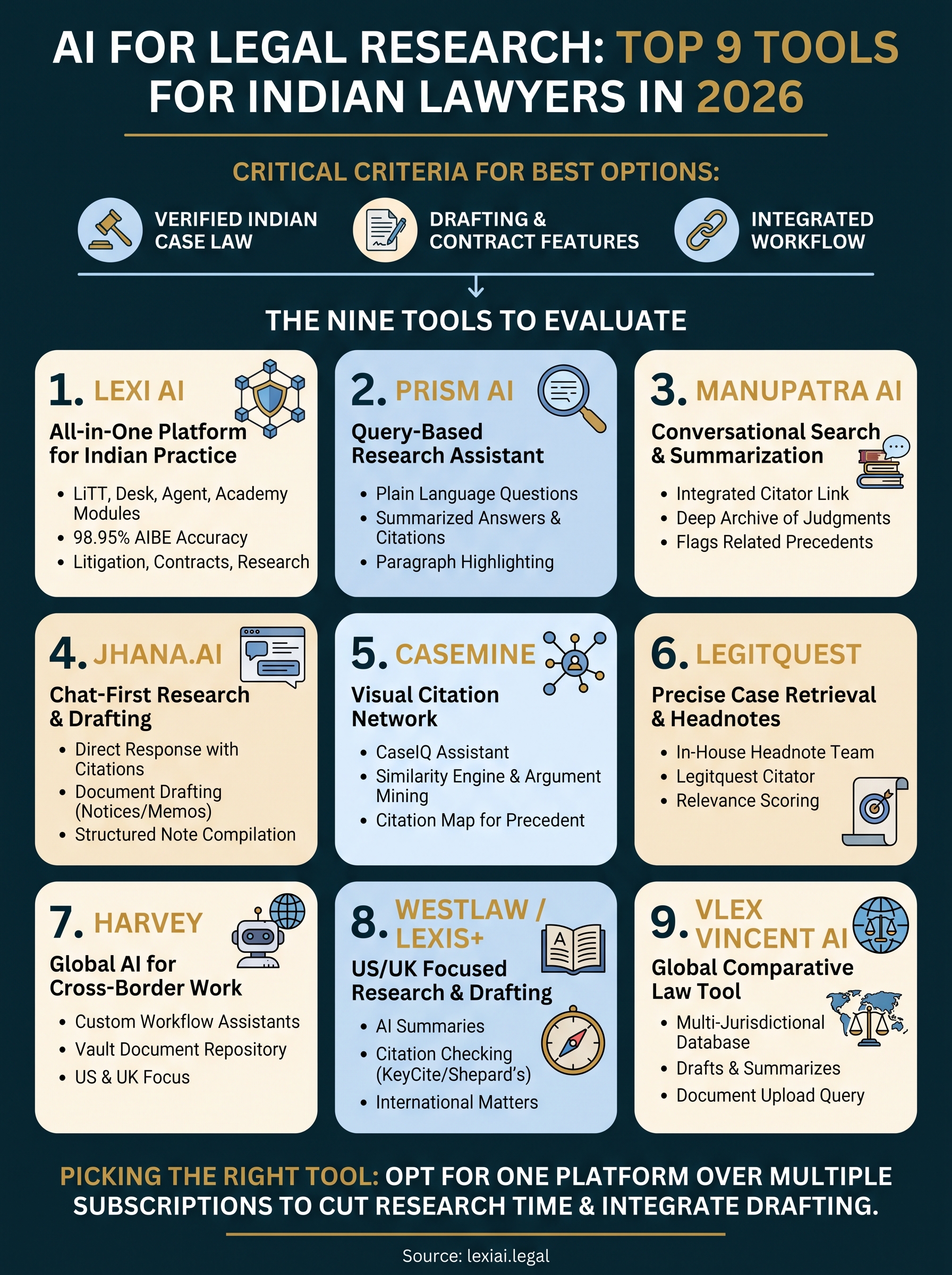
If you are trying to figure out which tool actually delivers, the short answer is that the best options combine verified Indian case law databases with drafting and contract features, not just a chatbot wrapper on top of generic AI. A strong legal research ai india tool should cut research time by more than half, cite real sections and judgments, and integrate into your existing drafting workflow instead of sitting apart from it.
This list covers nine tools worth evaluating in 2026, including platforms built specifically for Indian statutes and case law, along with a few general purpose options lawyers still use. Whether you are comparing AI for legal research platforms for the first time or switching from an existing subscription, the right pick depends on how deeply Indian case law is covered. We look at what each tool does well, where it falls short, and which one fits solo practitioners versus larger firms handling high volume litigation and contract work.
1. LeXi AI
LeXi AI sits at the top of this list because it was built from the ground up for Indian legal practice, not adapted from a general AI model. It combines litigation preparation, contract lifecycle management, and legal research into one connected platform, which is rare among legal ai research tools that usually specialize in just one function. Astute Lex Servicado Private Limited, the company behind it, positions LeXi AI as an ecosystem rather than a single-purpose search tool. As a complete AI for legal research and drafting platform, it is built to replace multiple subscriptions rather than add another one to your stack.

Key features
The platform is organized into four core modules, each targeting a different part of a lawyer's workflow.
- LeXi LiTT handles AI-assisted drafting, case strategy building, and courtroom preparation at scale.
- LeXi Desk manages the full contract lifecycle, including drafting, clause risk analysis, clause generation, translation, and document summarization.
- LeXi Agent runs legal research, precedent analysis, and drafting acceleration with instant judgment search across verified databases.
- LeXi Academy gives law students AI-guided training in research, drafting, and case understanding.
On top of these modules, LeXi AI offers case file summarization that condenses documents running into hundreds of pages within seconds, plus enterprise-grade APIs for firms that want to build custom workflows on top of the platform.
Indian law coverage
Coverage centers on Indian statutes, judgments, and commercial law, which is where the platform claims its strongest performance. LeXi AI reports a 98.95% accuracy score on the AIBE 20 legal reasoning dataset, a benchmark testing statutory interpretation and case analysis, putting it ahead of general models like GPT 5.5, Gemini 3.1 Pro, and Claude Opus 4.8 on Indian legal reasoning tasks.
A legal AI tool is only as useful as the accuracy of the law it cites, and that is where India-specific training makes the real difference.
Beyond Indian law, the platform extends partial support to US and UK law, useful for firms handling cross-border commercial disputes or international contracts alongside their domestic caseload. This makes LeXi AI one of the most India-specific choices for AI for legal research among every tool on this list.
Best for
Solo practitioners, litigation chambers, and corporate legal teams who want one platform instead of separate subscriptions for research, drafting, and contract review will get the most value here. Firms handling high volume litigation benefit from the claimed 90% reduction in case preparation time, while in-house teams managing contracts get clause risk flagging, such as indemnity risk detection, without switching tools. Law students preparing for practice also get a dedicated learning environment through LeXi Academy.
Pricing
Plans are structured around firm size and usage, from independent lawyers to enterprise deployments needing API access.
| Plan tier | Suited for | What is included |
|---|---|---|
| Individual | Solo lawyers, independent practitioners | Research, drafting, judgment search |
| Firm/Chambers | Small to mid-size firms | Full LiTT, Desk, and Agent modules, team access |
| Enterprise | Large firms, corporate legal departments | Custom APIs, dedicated support, higher usage limits |
Exact pricing details are available directly through lexiai.legal, since enterprise quotes depend on seat count and API usage. You can also start a free trial before committing to a plan.
2. Indian Kanoon's Prism AI
Indian Kanoon has been a go-to free case law search engine for Indian lawyers for over a decade, and Prism AI is its attempt to turn that raw database into an actual research assistant. Rather than just returning a list of matching judgments, Prism AI lets you ask questions in plain language and get summarized answers with citations pulled from its existing judgment archive. For a legal research ai for lawyers who already rely on Indian Kanoon daily, this feels like a natural upgrade rather than a new tool to learn.
Key features
Query-based case search sits at the core of Prism AI, letting you type a legal question instead of hunting for exact keywords. It also generates short summaries of long judgments and highlights the specific paragraphs relevant to your query, saving you from scrolling through fifty-page orders. Cross-referencing between related cases is built in, so you can trace how a principle has been applied across different High Courts.
Indian law coverage
Coverage here is a genuine strength since Indian Kanoon has indexed judgments from the Supreme Court, all High Courts, and several tribunals for years. This depth gives Prism AI a large, verified base to search from, which matters more than flashy AI features when you need a citation that actually holds up in court.
A research tool is only as strong as the database sitting underneath its AI layer.
Best for
Solo lawyers and small chambers on tight budgets who want AI-assisted search without paying for an enterprise platform will find this useful. It works best as a supplement to case law research rather than a full drafting or contract management solution. For lawyers seeking free or low-cost AI for legal research, Prism AI is a practical starting point.
Pricing
Basic search remains free, matching Indian Kanoon's long-standing model, while Prism AI features are offered through a paid subscription tier with usage limits on AI queries per month.
3. Manupatra AI
Manupatra has been a paid legal database staple in Indian law offices since long before AI research tools existed, and its AI layer builds on that legacy rather than starting fresh. Manupatra AI adds natural language search and case summarization on top of a database that many firms already pay for as part of their existing subscriptions. If your firm has used Manupatra for citations and bare acts for years, adding the AI features feels like an incremental upgrade rather than a switch to a new vendor.
Key features
The AI layer supports conversational search across judgments, statutes, and commentary, letting you phrase a query the way you would ask a colleague rather than typing exact section numbers. It also generates case summaries and flags related precedents, and its integration with Manupatra's existing citator tool helps you check whether a judgment has been overruled or distinguished later. This citator link is genuinely useful since a summary alone will not tell you if the case still holds good law.
Indian law coverage
Coverage spans central and state legislation, Supreme Court and High Court judgments, and tribunal orders, built on a database that has been maintained for over two decades. This makes Manupatra one of the more established legal ai software india options for firms that need depth across older, less digitized case law, and a dependable AI for legal research option for firms wanting deep archives.
Depth of archive matters more than novelty when a citation needs to survive scrutiny in court.
Best for
Larger firms and corporate legal departments already invested in Manupatra's subscription model get the most value, since the AI features come bundled rather than requiring a separate purchase. It suits teams that need statutory research alongside case law rather than litigation drafting support.
Pricing
Access requires an existing Manupatra subscription, with AI features typically included in higher-tier plans. Pricing is not published openly and requires contacting their sales team for firm-level quotes.
4. jhana.ai
jhana.ai entered the Indian legal AI space as a chat-first research assistant, built for lawyers who want quick answers without wading through a full database interface. Instead of browsing folders of judgments, you type a question into a conversational window and jhana.ai pulls relevant case law, statutes, and commentary into a direct response. This makes it one of the more approachable ai tools for legal research in india for lawyers who find traditional database search clunky.
Key features
The platform centers on a conversational research assistant that answers legal questions with citations attached, rather than returning a raw list of matching documents. It also supports document drafting assistance, letting you generate first drafts of notices, agreements, or pleadings based on a short prompt. A memo generation feature compiles research into a structured note you can hand to a senior or attach to a case file, which saves the manual formatting step many lawyers dread after a research session.
Indian law coverage
Coverage focuses on Indian statutes and reported judgments, with an emphasis on commercial and civil law areas most relevant to litigation and transactional practice. jhana.ai has positioned itself specifically around Indian legal workflows rather than repackaging a global product for the Indian market.
A chat interface only earns trust once every citation it gives you checks out against the actual judgment.
Best for
Junior lawyers, associates, and small firms that want fast first-pass research before deeper verification will find jhana.ai useful. It works well as a starting point for drafting notices or memos rather than as a full contract lifecycle or litigation management platform.
Pricing
Access is generally offered through tiered monthly subscriptions, with lower tiers capping the number of queries and higher tiers unlocking drafting and memo features. Firms should confirm current pricing directly with jhana.ai, since usage limits and tiers have shifted as the platform has expanded.
5. CaseMine
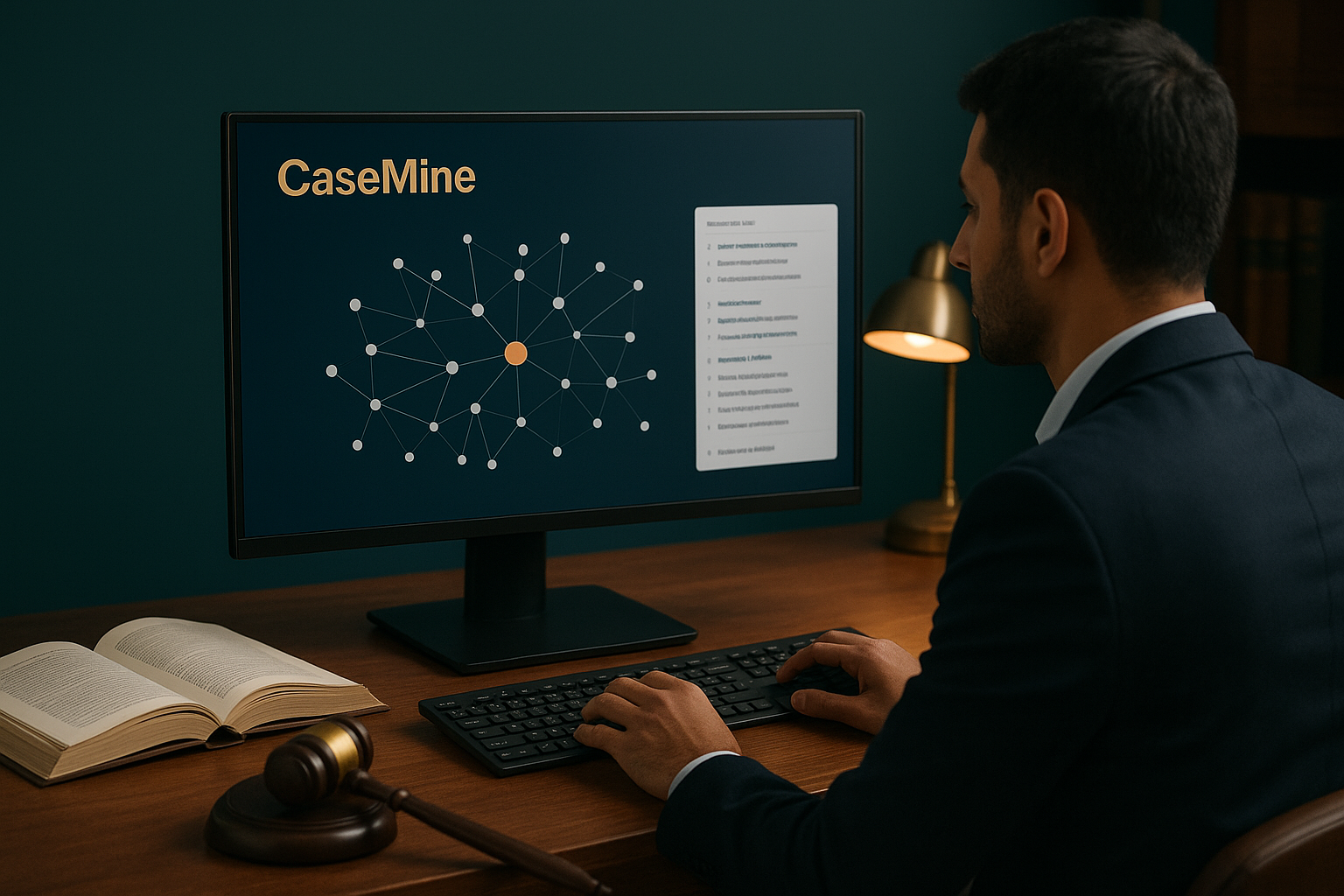
CaseMine built its reputation on visual citation networks rather than plain keyword search, giving lawyers a map of how a judgment connects to precedent instead of a flat list. Founded in India, CaseMine targets litigators who need to see the strength of a precedent at a glance before citing it in a brief. This visual-first approach makes it one of the more distinctive best ai tools for legal research in the country.
Key features
CaseIQ, the platform's AI research assistant, answers natural language questions and pulls supporting judgments with a confidence score attached. The Similarity Engine ranks cases by relevance to your facts rather than just keyword overlap, and TrueCitator flags whether a precedent has been affirmed, distinguished, or overruled since it was decided. Argument mining extracts the actual legal reasoning from long judgments, so you get the ratio rather than the entire order.
A citation map that shows overruled precedent at a glance saves a lawyer from an embarrassing moment in open court.
Indian law coverage
Database depth spans Supreme Court and High Court judgments along with select tribunal orders, built specifically around Indian citation practices. Coverage extends to global jurisdictions too, since CaseMine also serves law firms outside India, though the Indian dataset remains its strongest layer.
Best for
Litigators who argue precedent-heavy matters and need to verify a judgment's current standing before relying on it will get the most out of CaseMine. Appellate practice and constitutional litigation benefit particularly from the citation network view. Litigators comparing AI for legal research tools built around citation networks will find CaseMine's approach distinct.
Pricing
Access runs through subscription tiers billed to individual lawyers or firms, with higher tiers unlocking CaseIQ queries and full citation network access. Exact rates are not published and require a direct quote from CaseMine's sales team based on seat count.
6. Legitquest
Legitquest positions itself as a research-first platform built around fast citation retrieval and headnote quality, aimed squarely at litigators who need a clean answer without wading through unrelated results. Founded to compete directly with the older legal databases, Legitquest built its own headnoting team rather than relying purely on automated summaries, which shows in how precisely its search results match the actual legal question asked. Among legal ai research tools in India, it sits closer to a refined search engine with AI layered on top than a full drafting suite.
Key features
The platform's AI-powered search understands natural language queries and ranks results using its own relevance scoring rather than plain keyword matching. Legitquest Citator checks whether a judgment remains good law, flagging when it has been overruled, distinguished, or affirmed by a later bench. Headnotes are written in-house rather than machine-generated, giving you a concise summary you can trust without cross-checking every line against the full order.
A headnote written by a trained legal editor still beats a machine summary when precision matters in front of a judge.
Indian law coverage
Coverage spans Supreme Court and High Court judgments along with central and state legislation, with particular strength in commercial and civil litigation matters. Legitquest has built its database specifically around Indian citation conventions, which matters when you need a citation format that a court registry will accept without edits.
Best for
Litigators and chambers that prioritize precise case law retrieval over drafting or contract features will find Legitquest a strong fit. It works well as a dedicated research layer sitting alongside separate drafting tools rather than as an all-in-one platform.
Pricing
Access runs through subscription plans priced for individual lawyers, chambers, and firms, with higher tiers unlocking full citator access and bulk search limits. Legitquest does not publish exact rates, so firms need to request a quote directly based on the number of users.
7. Harvey
Harvey is the legal AI platform built on OpenAI's models that most large international law firms mention first when asked what they are testing. It was never built for Indian statutes or judgments, but a growing number of Indian firms with cross-border practices use it alongside domestic tools rather than instead of them. Harvey works best as a general-purpose research and drafting layer, not as a dedicated ai litigation software india solution.
Key features
The platform centers on a workflow builder that lets firms create custom AI assistants for tasks like due diligence review, contract analysis, and memo drafting. Vault, its document repository feature, lets you upload case files and query them directly, which speeds up review on large litigation or transaction files. Harvey also supports research across common law jurisdictions with citations, though the underlying training leans heavily on US and UK sources.
Indian law coverage
Coverage of Indian statutes and judgments is thin compared to platforms built specifically for the Indian market. Harvey can process Indian documents you upload directly, but it does not maintain a verified Indian case law database the way Manupatra or CaseMine does.
A general AI model can draft fluently in any jurisdiction, but fluency is not the same as knowing which precedent still holds good law.
Best for
Firms with significant cross-border work, particularly those advising international clients on matters touching US or UK law, get the most value here. Standalone Indian litigation practices will find better accuracy from India-focused tools.
Pricing
Harvey sells directly to firms through enterprise contracts rather than published self-serve plans. Pricing depends on seat count and usage volume, and firms need to contact Harvey's sales team for a quote, which typically runs higher than most India-based subscription tiers.
8. Westlaw Precision AI and Lexis+ with Protégé
Westlaw and LexisNexis are the two names most Indian lawyers recognize from foreign qualifying exams or LLM research abroad, and both have added generative AI layers on top of their existing platforms. Westlaw Precision AI and Lexis+ with Protégé are separate products from competing vendors, but Indian firms usually evaluate them together since both target the same US and UK research use case rather than domestic litigation.
Key features
Westlaw Precision AI adds AI-assisted research summaries, citation checking through KeyCite, and drafting support built around US case law structure. Lexis+ with Protégé works similarly, using Protégé as a conversational assistant that answers research questions, drafts memos, and checks citations against Shepard's, LexisNexis's citator tool. Both platforms let you upload documents for AI-assisted review, which suits firms handling due diligence on cross-border transactions.
Indian law coverage
Neither platform maintains a dedicated Indian statute or judgment database, since both were built around US and UK legal systems. Indian firms use them almost exclusively for matters touching foreign law, not for domestic litigation or contract work governed by Indian statutes.
A platform built for common law research abroad will not know the difference between a Delhi High Court order and a settled Supreme Court precedent.
Best for
Indian firms advising clients on US or UK matters, or handling international arbitration referencing foreign case law, get real value from either platform. Domestic litigation practices and contract teams working purely under Indian law will find little use here.
Pricing
Both platforms sell through enterprise contracts rather than published rates, with pricing tied to seat count and database access levels. Firms typically pay in US dollars, and costs run higher than most India-focused subscription tiers once you factor in currency conversion and enterprise minimums.
9. vLex Vincent AI
vLex built its name on a global case law database spanning over 50 countries, and Vincent AI is its research assistant layered on top of that archive. Unlike platforms built solely for Indian courts, vLex Vincent AI pulls from a cross-border repository, which makes it more of a comparative law tool than a dedicated legal ai platform india solution. Firms handling international arbitration or cross-jurisdictional disputes tend to reach for it when a matter requires citing foreign precedent alongside Indian case law.
Key features
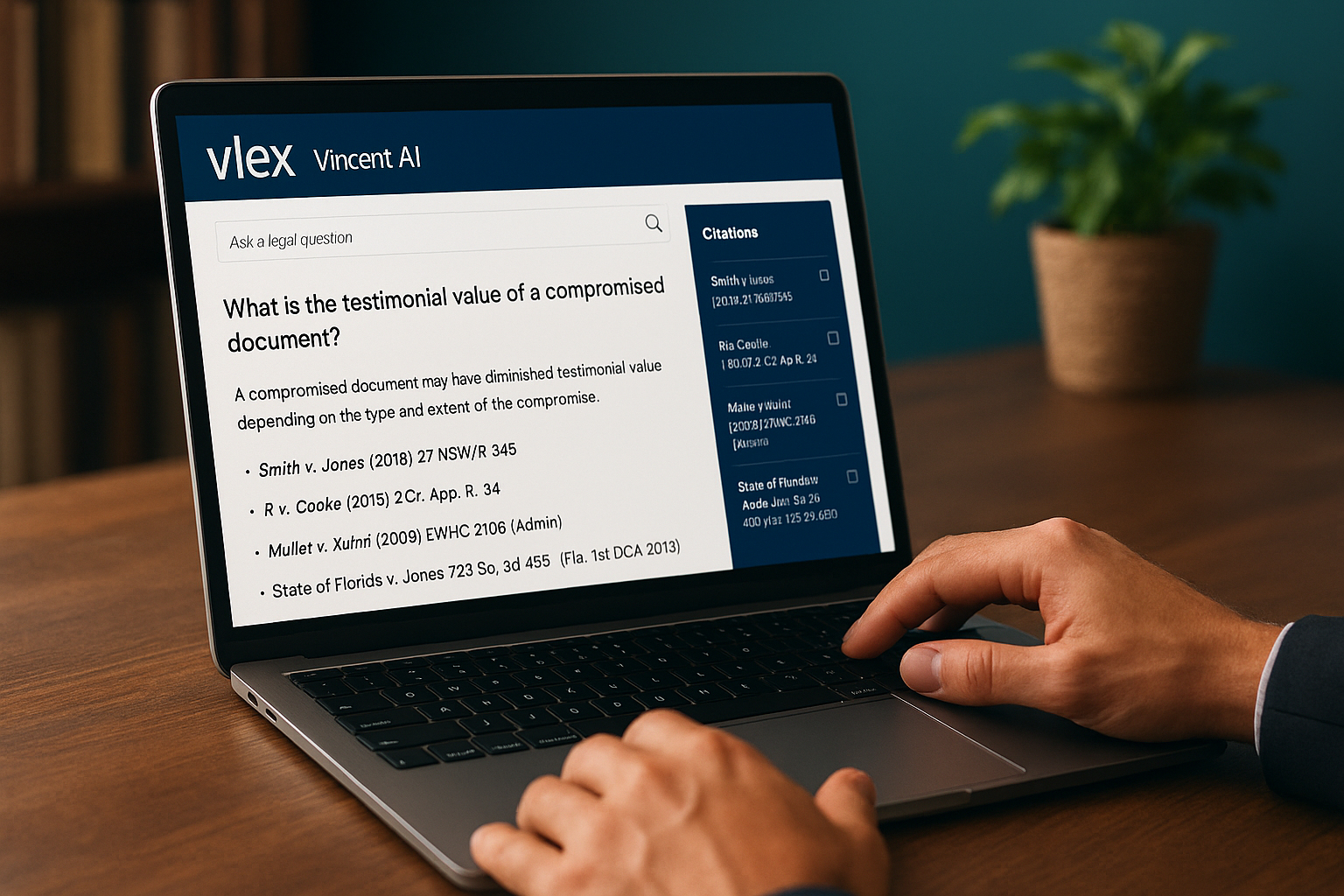
Vincent AI answers legal questions in plain language and returns citations drawn from vLex's multi-jurisdictional database rather than a single country's judgments. It also drafts memos, summarizes long documents, and checks citations for continued validity through an integrated citator. A document upload feature lets you query your own case files directly, useful when comparing a foreign judgment against a local pleading.
Indian law coverage
Coverage of Indian statutes and judgments exists but sits thinner than the depth vLex offers for US, UK, and EU law. Vincent AI can retrieve reported Indian Supreme Court decisions, but firms relying on it for High Court orders or tribunal rulings often find gaps that Indian-built platforms do not have.
A global database built for comparative law will rarely match the depth of a platform built specifically around one jurisdiction's courts.
Best for
Firms handling international arbitration, cross-border disputes, or comparative law research where citing foreign precedent matters get genuine value here. Purely domestic litigation practices will find sparser Indian coverage than dedicated legal ai research tools built for Indian courts.
Pricing
Access runs through enterprise subscriptions priced in US dollars, with tiers based on jurisdiction access and seat count. Firms need to request a quote directly, since vLex does not publish self-serve pricing for the Indian market.
Picking the right tool for your practice
Most Indian firms end up running two tools at once: a citation database and a drafting or litigation assistant. That works, but it means paying for two subscriptions and switching context every time you move from research to drafting a notice or agreement. The tools worth paying for are the ones that cut research time without making you double check every citation manually, and that combine legal research ai for lawyers with actual drafting support rather than just a search box. Ultimately, the best AI for legal research is the one that fits into your existing workflow without adding a second subscription to manage.
If you handle Indian litigation, contracts, or both, and want one platform instead of three, that is where LeXi AI fits. It covers judgment search, drafting, contract risk analysis, and case strategy in one place, benchmarked specifically for Indian legal reasoning rather than adapted from a general model. Check the pricing plans or start a free trial and see which tier matches your practice size before your next research deadline catches up with you.