

Bharatiya Nagarik Suraksha Sanhita: What It Is and How It Replaces the CrPC
The Bharatiya Nagarik Suraksha Sanhita, 2023 (BNSS) is the law that now governs criminal procedure in India. It replaced the Code of Criminal Procedure, 1973 (CrPC), effective July 1, 2024, and it applies to how police investigate, how courts try cases, and how sentences get executed across the country. If you searched for the full text or a section-by-section breakdown, you are in the right place.
This piece answers the direct question first: what changed, what stayed the same, and where the BNSS provisions sit compared to their CrPC counterparts. Many sections carry the same substance under new numbers, but several, including timelines for investigation, provisions for electronic evidence, and trial in absentia, mark genuine departures from the old code. Lawyers filing under the new numbering need to get this mapping right from day one.
Below, I walk through what the BNSS is, why Parliament replaced the CrPC, and how the new criminal procedure code restructures arrest, investigation, and trial. I also cover the renumbering pattern so you can move between old and new sections without confusion. For lawyers handling high case loads, an AI platform built for Indian law can speed up cross-referencing BNSS provisions against CrPC precedent, though the legal reasoning here still rests on the statute itself.
Why the Bharatiya Nagarik Suraksha Sanhita matters
India's criminal justice system has run on borrowed scaffolding since 1861, when the first Code of Criminal Procedure arrived under British rule. That scaffolding got a facelift in 1898 and again in 1973, but the underlying framework, built for a colonial administration, stayed largely intact for more than a century and a half. The Bharatiya Nagarik Suraksha Sanhita is Parliament's attempt to replace that framework entirely, not simply patch it, and that distinction matters more than most summaries let on.
Pendency numbers explain the urgency behind the change. The National Judicial Data Grid has repeatedly shown crores of criminal cases stuck in trial courts, some for over a decade, and delayed trials erode public trust in the courts as much as any substantive legal gap does. Lawmakers built the BNSS around the idea that procedure itself was slowing down justice, not just case volume, so the fixes needed to touch investigation, trial, and sentencing all at once.
The BNSS exists because a colonial-era code could not keep pace with a digital, backlogged justice system.
A colonial-era code meets a digital-first system
The 1973 CrPC never anticipated video conferencing, e-FIRs, or digital evidence chains as routine features of a criminal case. Courts patched these gaps one ruling at a time, and lawyers spent years arguing over whether a WhatsApp chat needed a certificate under Section 65B of the Evidence Act before a judge would even look at it. The BNSS folds many of these practices directly into its text, so investigators and judges now work from one updated rulebook instead of a decade of scattered High Court interpretations that varied by state.
Government communications describe the BNSS as a shift toward technology-driven investigation, and the statute backs that framing with real provisions rather than aspiration. Video recording of search and seizure, electronic summons, and digital case diaries are no longer optional add-ons argued over in court. They sit inside the sections themselves, which is a meaningfully different starting point for anyone drafting a chargesheet or a bail application.
Why timelines matter for pending cases
Time limits are the other major reason this code matters to anyone practicing criminal law. The BNSS puts hard deadlines on stages the CrPC left open-ended, including timelines for filing a police report and for concluding trials in cases carrying the death penalty or life imprisonment once charges are framed. Advocates who once used procedural delay as a quiet defense strategy now face a code that penalizes drift on both sides, prosecution and defense alike.
Judges have also gained clearer authority to push cases forward instead of granting repeated adjournments as a matter of course. Fewer open-ended timelines mean fewer opportunities to stall proceedings indefinitely, which is a direct response to the pendency problem described above. Whether this actually shortens trial length in practice will depend on court infrastructure and staffing, but the statutory intent is unambiguous.
What this means for lawyers, firms, and litigants
For practicing lawyers, none of this is academic. Every chargesheet, remand application, and bail plea now needs to cite the correct BNSS section, and courts have already started rejecting filings that reference outdated CrPC numbers by mistake. Law firms managing high volumes of criminal litigation, along with corporate legal teams overseeing white-collar matters, need updated templates and clause libraries built around the new numbering from day one, which means revisiting the drafting skills that keep documents precise.
Students preparing for the bar exam or judicial services face the same shift in real time. State bar exams and civil judge exams have already begun testing under the new code, so anyone still studying from a 2019 or 2021 CrPC bare act is preparing from the wrong statute. Understanding why the Bharatiya Nagarik Suraksha Sanhita replaced the old code is the first step; mapping its sections correctly is the next, and that is where most practical confusion still shows up.
How the BNSS replaces the CrPC step by step
Parliament did not simply swap one bare act for another overnight. The replacement process ran through introduction, committee review, re-introduction after withdrawal of an earlier draft, and a staggered notification that gave police stations, courts, and law schools time to prepare. Knowing this sequence helps you understand why some CrPC provisions vanished entirely while others reappeared almost word for word under a new section number.
The legislative timeline
The government first introduced the Bharatiya Nagarik Suraksha Sanhita Bill in August 2023, withdrew it after parliamentary committee feedback, and reintroduced a revised version that Parliament passed in December 2023. President assent followed on December 25, 2023, but the code did not take immediate effect. The Ministry of Home Affairs notified July 1, 2024 as the commencement date, giving the system roughly six months to update systems, train personnel, and print new bare acts.
- August 2023: Original bill introduced in Lok Sabha
- September 2023: Bill withdrawn, referred to Standing Committee
- December 2023: Revised bill passed by both houses
- December 25, 2023: Presidential assent granted
- July 1, 2024: BNSS formally commences, CrPC repealed
The repeal and savings clause
Section 531 of the BNSS does the actual legal work of replacement. It repeals the Code of Criminal Procedure, 1973 in its entirety, then immediately carves out savings language protecting anything already in motion. This is standard drafting technique for a code of this size, and you see the same pattern in how the Bharatiya Nyaya Sanhita replaced the Indian Penal Code on the same date.
One section, Section 531, does the entire job of retiring the CrPC while protecting cases already underway.
Applying the new code stage by stage
Replacement did not mean every ongoing file switched overnight. Fresh FIRs registered on or after July 1, 2024 fall under BNSS numbering from the first entry. Investigations, inquiries, and trials that were already pending before that date generally continue under the CrPC framework they started under, a point worth flagging now since a later section in this piece works through the pending-case question in full detail. Section-by-section mapping tables, cross-referenced against the old CrPC, remain the fastest way to check which regime governs a specific stage of a case you are currently handling.
Key differences between the BNSS and the CrPC, 1973
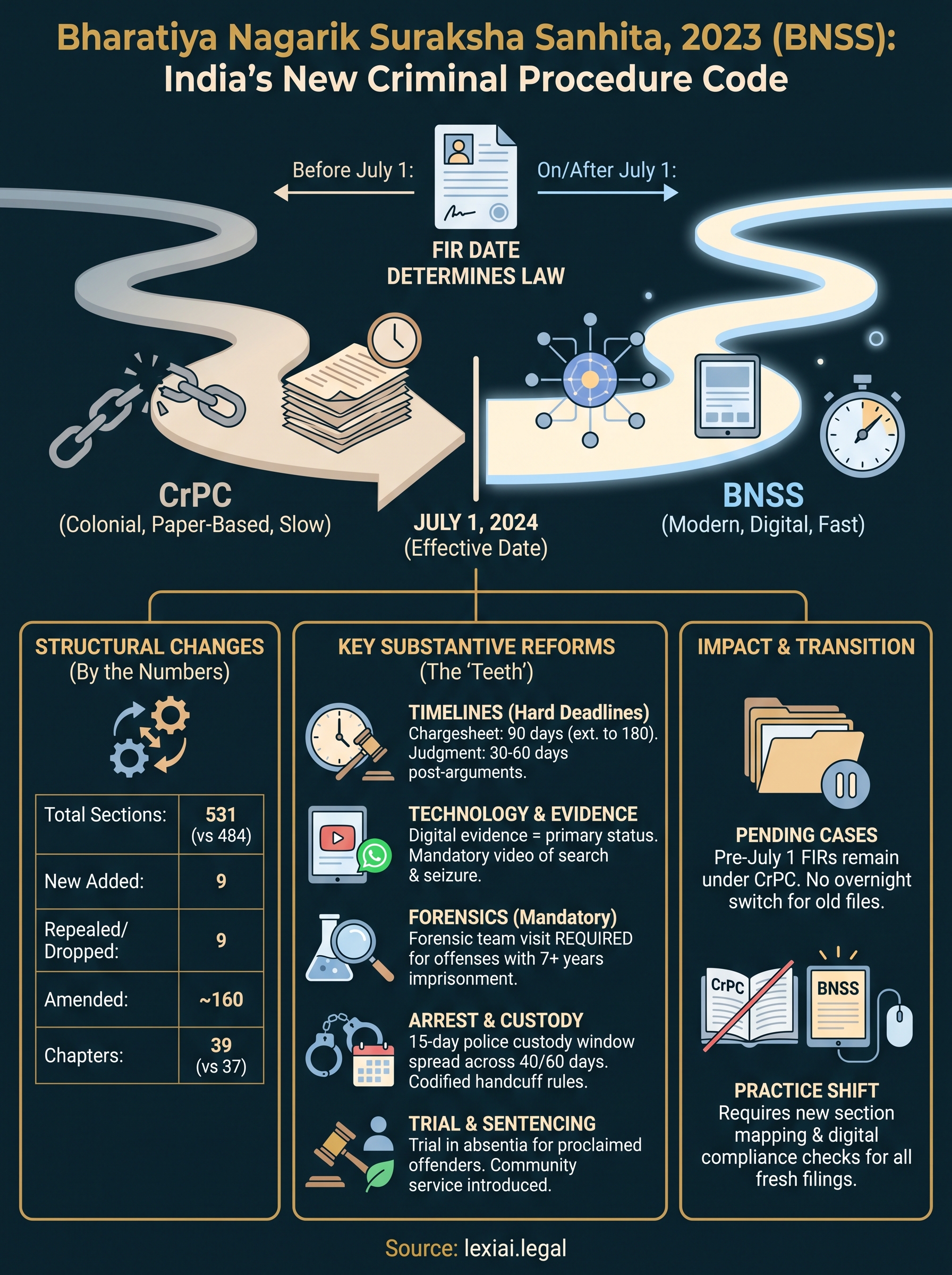
The BNSS is not a cosmetic rename of the CrPC. Roughly 160 sections were amended, 9 new sections were added, and 9 old ones were dropped, but the more important shifts sit in substantive changes rather than headcounts. Mandatory forensic visits for serious offenses, hard timelines for charge framing, and formal recognition of electronic records as primary evidence did not exist in the 1973 code at all. Those additions, not the renumbering, are what actually change how a case gets built and argued.

Numbering, sections, and structural counts
Comparing raw numbers helps you see the scale of the overhaul before you get into individual provisions. The table below lines up the two codes on structure alone, which is useful when you are deciding how much of your existing template library needs rebuilding.
| Feature | CrPC, 1973 | BNSS, 2023 |
|---|---|---|
| Total sections | 484 | 531 |
| Chapters | 37 | 39 |
| Schedules | 2 | 2 |
| Sections repealed or dropped | N/A | 9 |
| New sections added | N/A | 9 |
| Provisions amended | N/A | ~160 |
Renumbering alone would not have justified a new code; the added forensic, timeline, and evidence provisions are what make the BNSS a genuine replacement.
Timelines that did not exist before
Beyond the section count, the BNSS locks in deadlines the CrPC left to judicial discretion. Police must now file a chargesheet within 90 days for most offenses, with a limited extension to 180 days, and courts must pronounce judgment within 30 days of completing arguments, extendable to 60 days for reasons recorded in writing. Chapters governing trials for offenses carrying the death penalty or life imprisonment now carry a similar push toward speed once charges are framed, a change discussed at length in the earlier section on pending cases. None of these deadlines had a statutory anchor under the old code, so lawyers relied on case management orders that varied wildly between courts.
Substantive changes beyond timing
Substantive shifts go further than scheduling. Section 356 of the BNSS permits trial in absentia for a proclaimed offender after a defined waiting period, something the CrPC never allowed in this form. Community service appears as a sentencing option for certain minor offenses, a first for Indian criminal procedure. Handcuffing rules were also codified with specific conditions attached, replacing a patchwork of Supreme Court directions that police stations applied inconsistently. Together these changes mean the BNSS reads less like an updated CrPC and more like a code built around measurable outcomes, speed, technology, and sentencing flexibility, rather than pure procedural sequencing.
How the BNSS is structured across chapters and schedules
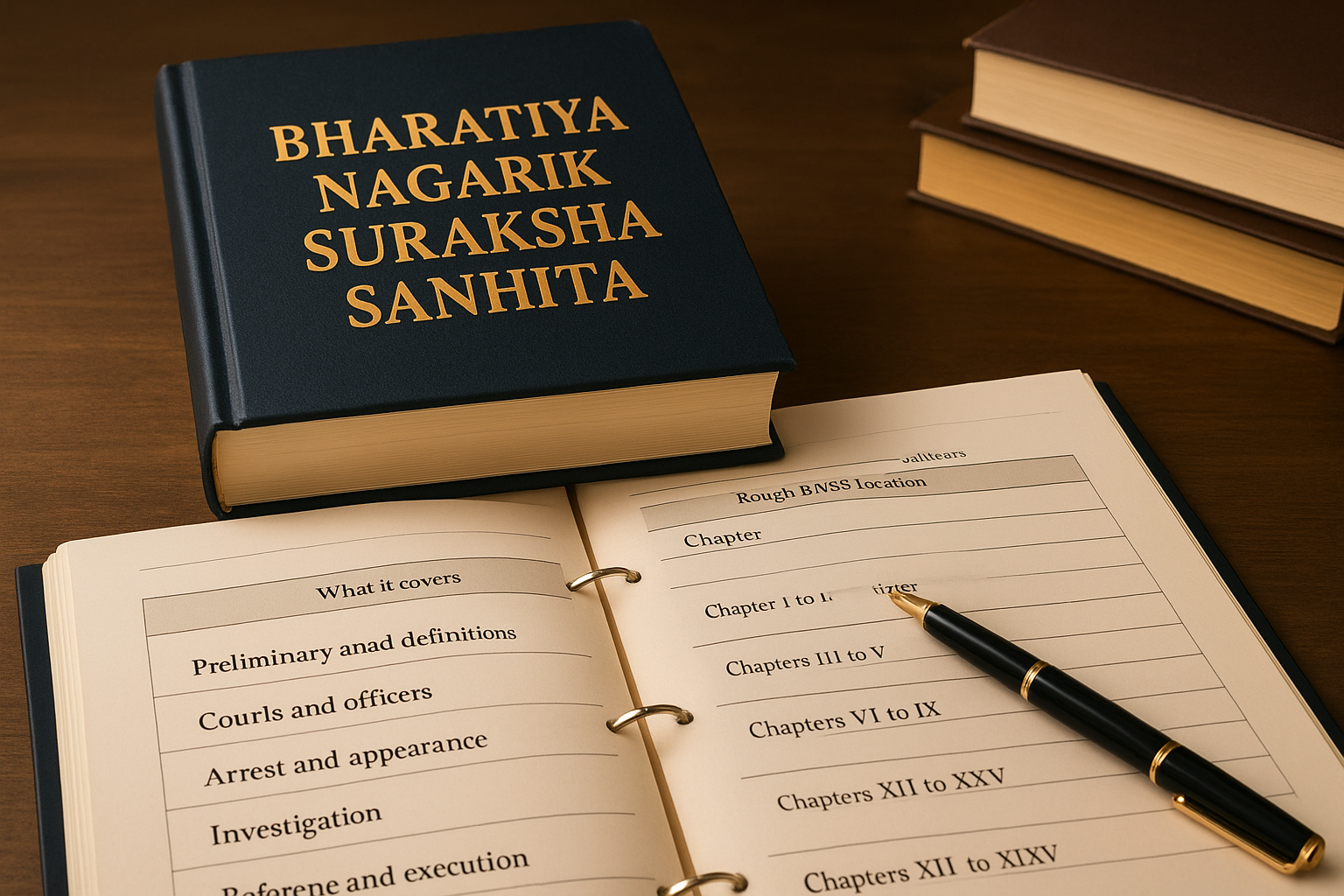
Opening the bare act for the first time, you will find the Bharatiya Nagarik Suraksha Sanhita organized into 39 chapters and 531 sections, compared to 37 chapters and 484 sections under the CrPC. That two-chapter increase understates how much reshuffling happened inside, since several chapters were split, renamed, or given entirely new content to house forensic and technology mandates that never existed before. Getting comfortable with this layout matters because most practical research starts with locating the right chapter, not the right section number.
Chapter groupings from arrest to appeal
Grouping the chapters by function makes navigation easier than reading the table of contents cover to cover. The code still moves through the same broad arc as the CrPC, preliminary definitions, constitution of criminal courts, powers of officers, arrest and processes to compel appearance, security proceedings, inquiry and trial, appeals, reference and revision, and execution of sentences. Within that arc, though, you will notice new material bolted on, particularly around forensic investigation and electronic case management, that has no direct CrPC counterpart at all.
| Chapter group | What it covers | Rough BNSS location |
|---|---|---|
| Preliminary and definitions | Scope, definitions, application | Chapters I to II |
| Courts and officers | Constitution of courts, powers | Chapters III to V |
| Arrest and appearance | Arrest, summons, warrants | Chapters VI to IX |
| Investigation | Police powers, forensic mandates | Chapters XII to XIV |
| Trial procedure | Charge, evidence, judgment | Chapters XVII to XXVI |
| Appeals and execution | Appeal, revision, sentence execution | Chapters XXX to XXXV |
Chapter numbers changed less than section numbers, so anchoring your research to the chapter first is often faster than hunting for an old section by memory.
The two schedules and what they cover
Both codes retain two schedules, but their contents shifted along with everything else. The First Schedule still classifies offenses under the Bharatiya Nyaya Sanhita, the way the old CrPC schedule mapped offenses under the Indian Penal Code, listing whether an offense is cognizable or non-cognizable, bailable or non-bailable, and which court can try it. The Second Schedule carries the prescribed forms, summons, warrants, bonds, and now several new formats tied to electronic communication and forensic reporting that the 1973 code simply did not need.
New chapters that did not exist in the CrPC
A handful of provisions sit outside the old chapter logic entirely because the CrPC had no place to put them. Mandatory forensic team visits for offenses carrying seven years or more of imprisonment, formal recognition of audio-video statements, and structured timelines for chargesheets all slot into existing chapters but carry weight the earlier code never assigned them. Reading the BNSS chapter by chapter, rather than jumping straight to a remembered CrPC section number, is the fastest way to spot where the substance actually changed.
New arrest, bail, and custody rules under the BNSS
Arrest and custody are where most citizens actually encounter the criminal justice system, and the Bharatiya Nagarik Suraksha Sanhita rewrites several of these rules with real teeth rather than guidelines borrowed from Supreme Court judgments. Police officers, defense lawyers, and even ordinary litigants need to know these changes because they affect the first hours after an arrest, not just the eventual trial. Getting this wrong at the remand stage can cost a client days of custody that a correctly filed application would have avoided.
Arrest safeguards that now sit in the statute
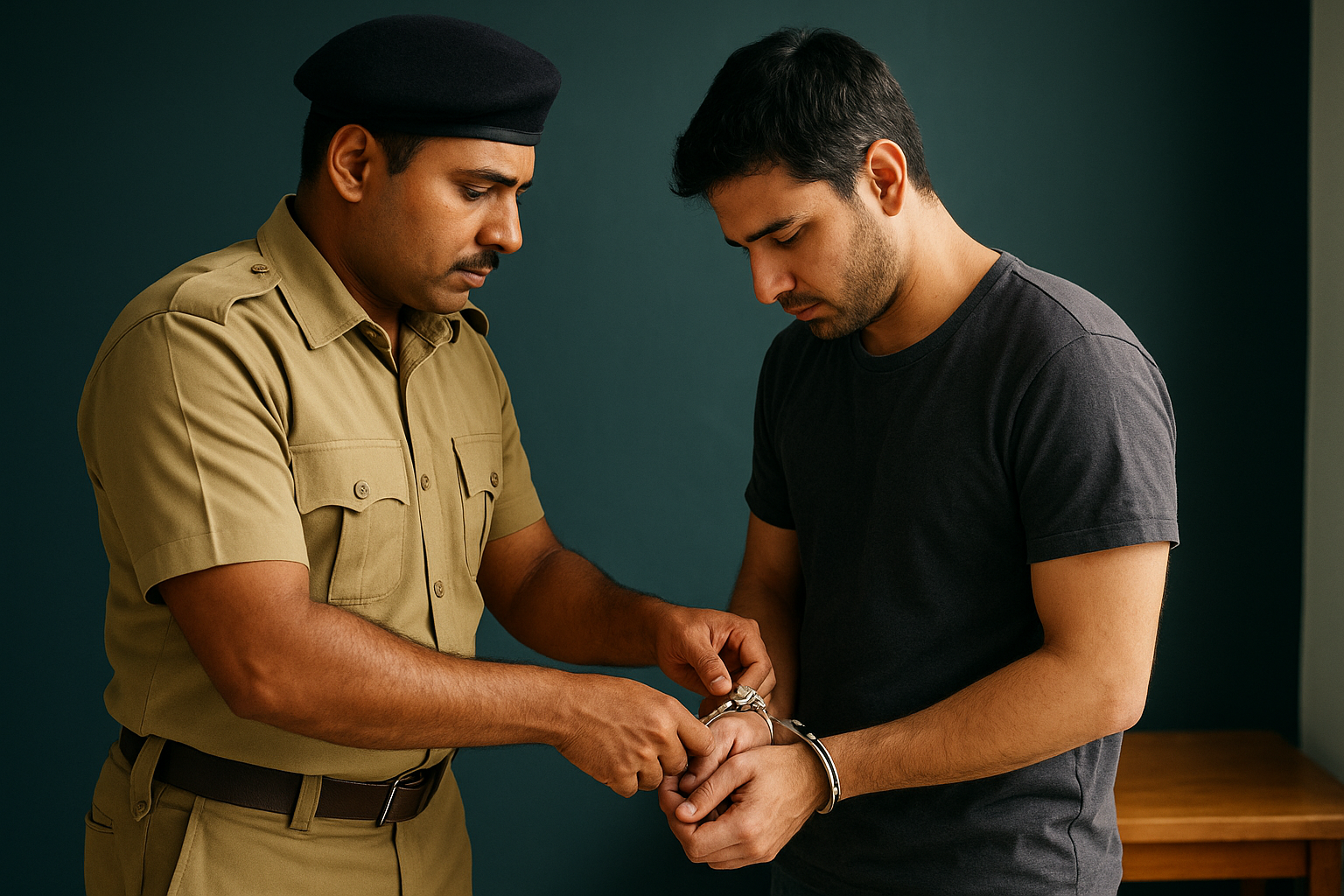
Section 47 of the BNSS carries forward and sharpens the right to have a relative or friend informed of an arrest, and Section 43 codifies handcuffing conditions that police once applied unevenly across states. Officers can now use handcuffs only in defined situations, such as habitual offenders or those who escaped custody before, rather than as a routine practice. Section 35 also protects elderly and infirm persons from arrest without prior permission in cases carrying lighter sentences, formalizing protections that earlier existed only through judicial precedent. None of these ideas is new to Indian law, but writing them into the code itself removes the argument over whether a particular High Court ruling applies in a given state.
Custody periods spread across the investigation
The most consequential shift sits in Section 187, the BNSS equivalent of the old Section 167 remand provision. Under the CrPC, police custody had to be sought within the first 15 days after arrest or it lapsed entirely. Section 187 allows that 15-day custody window to be requested in parts across the full 40 or 60-day period, depending on the offense, before the accused becomes eligible for default bail.
Police custody under the BNSS can now be spread across the entire investigation window, not just the first fifteen days, a change that reshapes how remand applications get argued.
| Custody stage | CrPC, 1973 | BNSS, 2023 |
|---|---|---|
| Police custody window | First 15 days only | Up to 15 days, spread across 40 or 60 days |
| Default bail trigger | 60 or 90 days | 60 or 90 days, unchanged |
| Handcuffing conditions | Court-made guidelines | Codified under Section 43 |
Bail reforms for undertrial prisoners
Section 479 replaces the older Section 436A framework governing undertrial release and goes further for first-time offenders. A first-time offender who has served one-third of the maximum sentence for the alleged offense now qualifies for release on a personal bond, rather than waiting for half the sentence like other undertrials. Litigants facing multiple charges, or offenses carrying the death penalty or life imprisonment, remain outside this benefit, so eligibility still needs a careful reading of the chargesheet before filing.
Forensic evidence and technology mandates under the BNSS
Forensic science moves from a discretionary tool to a statutory requirement under the Bharatiya Nagarik Suraksha Sanhita, and that single shift changes how investigators build a case from day one. Section 176(3) now makes a forensic team visit mandatory for any offense carrying a sentence of seven years or more, with the team required to collect forensic evidence at the crime scene and record the process through video. States without enough forensic capacity get a five-year window to build it out, but the statutory obligation exists from July 1, 2024 regardless of ground-level readiness.
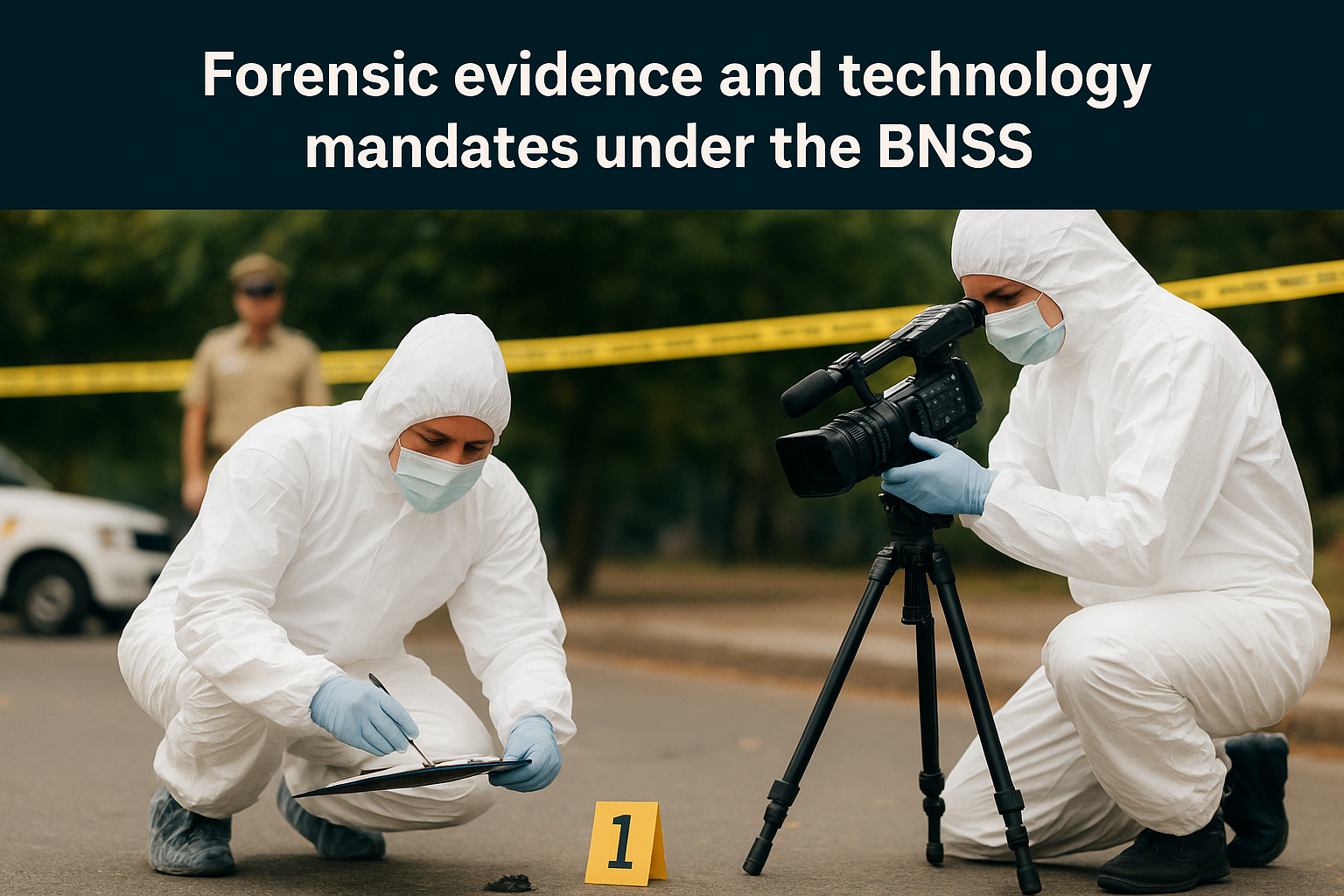
A forensic team visit is no longer optional for serious offenses; it is a statutory step the investigation cannot skip.
Videography and audio-visual recording requirements
Beyond the crime scene, the BNSS extends recording obligations into search, seizure, and statement-taking. Section 105 requires audio-video recording of the search and seizure process, and the recording itself now counts as part of the evidentiary record rather than an optional backup. Statements recorded under Section 183, including those from rape survivors, must also be captured on audio-video wherever practicable, a protection the CrPC left to guidelines rather than statute. Police officers who skip these steps risk a chargesheet that a defense lawyer can challenge on procedural grounds, so this is not a technical footnote, it changes how evidence gets built from the first day of investigation.
Electronic evidence gets equal statutory footing
Section 63 of the Bharatiya Sakshya Adhiniyam, working alongside the BNSS, treats electronic and digital records as documents with the same evidentiary status as paper, removing years of litigation over whether a WhatsApp chat or CCTV clip needed special pleading before a court would admit it. The BNSS itself permits electronic filing of complaints, e-summons, and service of documents through recognized electronic means under Section 63 and related provisions on service of summons, cutting down the physical paperwork that used to stall proceedings for weeks.
Technology-driven trial and case management
Courts also gain broader authority to conduct proceedings remotely. Section 530 allows trials, inquiries, and proceedings to be held through electronic modes, including video conferencing for witness examination and even certain appearances, which the CrPC never spelled out with this clarity. Digital case diaries, maintained and transmitted electronically rather than in a physical register, fall under the same push toward a paperless workflow.
- Forensic team visit mandatory for offenses carrying 7+ years imprisonment (Section 176(3))
- Video recording required for search and seizure (Section 105)
- Audio-video recording of certain statements, including survivor statements (Section 183)
- Electronic filing of complaints and e-summons permitted
- Trials and proceedings can be conducted through video conferencing (Section 530)
For lawyers, this means chargesheets and bail applications now need to reference whether forensic and recording mandates were actually followed, since a gap here has become a live ground for challenge rather than a background compliance issue.
Which law applies to pending cases, the CrPC or the BNSS
Section 531(2) of the BNSS answers this question directly: any investigation, inquiry, trial, or appeal pending on July 1, 2024 continues under the Code of Criminal Procedure, 1973, as if the BNSS had never been enacted. Fresh matters registered on or after that date fall entirely under the new numbering. This single savings clause prevents millions of pending cases from having to restart under unfamiliar sections, and it is the first thing any lawyer should check before drafting a filing.
The date an FIR gets registered, not the date you file a motion, decides whether the CrPC or the BNSS governs a case.
The FIR date decides the applicable code
Government guidance and early High Court orders have treated the FIR registration date as the controlling factor for most stages of a case. If police registered the FIR before July 1, 2024, the investigation, chargesheet, and trial that follow generally stay under CrPC provisions, even if hearings are still happening years later. Judges expect lawyers to cite the correct regime based on this date, and a bail application citing Section 187 of the BNSS in a case that started under the old Section 167 framework invites an avoidable objection from the bench.
Appeals, revisions, and execution of older judgments
Appeals and revisions arising from a trial conducted under the CrPC also continue under CrPC procedure, since the underlying case never shifted regimes midstream. Execution of sentences passed before July 1, 2024 similarly follows the older code's mechanics for warrants, surety, and remission. Courts have not treated the transition as an opportunity to reopen settled procedural questions, so practitioners handling legacy files should resist the temptation to argue that a newer BNSS provision retroactively improves their client's position.
A quick reference for mixed-stage cases
Most confusion arises in cases where an FIR predates July 1, 2024 but a fresh procedural step, such as a new charge or a supplementary chargesheet, gets filed afterward. The safer approach treats the entire case as governed by whichever code applied at FIR registration, unless a court specifically directs otherwise.
| Case stage | Governing code |
|---|---|
| FIR registered before July 1, 2024 | CrPC, 1973 |
| FIR registered on or after July 1, 2024 | BNSS, 2023 |
| Appeal from a CrPC-era trial | CrPC, 1973 |
| Supplementary chargesheet in an old FIR | CrPC, 1973 |
Before filing anything, confirm the FIR date, which you can verify by checking case status by police station on eCourts, check whether any court order has already fixed the applicable regime, and update your section references accordingly. Skipping this step is the single most common drafting error lawyers are making right now, and it is entirely avoidable with a two-minute check.
Using AI legal tools to work with the BNSS
Most lawyers I know are still running two bare acts side by side on their desks, one CrPC and one Bharatiya Nagarik Suraksha Sanhita, just to check which section maps to which. That works for a handful of filings a week. It falls apart when a firm is drafting fifty remand applications a month across multiple benches, each needing the correct section number and the correct governing code based on FIR date. This is exactly the kind of repetitive cross-referencing where one of the best legal AI tools for research and drafting earns its place in a litigation practice rather than replacing the lawyer's judgment.
Cross-referencing old CrPC sections against new BNSS numbers
Tools built for searching Indian judgments and statutes in seconds can pull the corresponding BNSS provision the moment you type in an old CrPC section, along with the chapter it now sits under. That saves the ten minutes a junior associate would otherwise spend flipping between two bare acts before drafting a single paragraph. It also flags cases where the substance changed, not just the number, which matters more for a bail plea than a cosmetic renumbering does.
A section-mapping check that used to take ten minutes per filing can now happen in the time it takes to type the old number.
Building bail and remand applications under the new custody rules
Remand work under Section 187 needs precise tracking of how many custody days a police officer has already used across the 40 or 60-day window, something a manual diary entry handles poorly at scale. An AI legal assistant for Indian lawyers can generate a first draft of a remand application or bail plea that already cites the correct BNSS section, provided the lawyer feeds in the FIR date and offense details accurately. The AI output still needs a lawyer's review before filing, since courts hold the signing advocate responsible for every citation, not the software.
Checking forensic and evidence compliance before filing
A chargesheet missing a mandatory forensic team visit under Section 176(3), or lacking the video record required under Section 105, now hands the defense a genuine procedural ground rather than a technical footnote. AI-assisted review can flag these gaps by comparing a chargesheet against the statutory checklist before it goes to court:
- Was a forensic team visit conducted for offenses carrying seven years or more?
- Is there video documentation of the search and seizure?
- Were survivor or witness statements recorded on audio-video where required?
- Does the filing cite the correct BNSS section rather than an old CrPC number?
Running through this list with software support catches errors before a judge does, which is a cheaper place to find them.
Preparing for practice under the new code
The Bharatiya Nagarik Suraksha Sanhita is not a rename exercise. It rewrites custody timelines, makes forensic visits mandatory, gives electronic evidence equal footing, and locks a hard date, July 1, 2024, that decides which code governs any given file. Getting the FIR date wrong, or citing an old CrPC section out of habit, is the kind of error courts are no longer forgiving.
Build your practice around the new numbering now, not after a bench rejects a filing. Keep a section-mapping habit for every old file you touch, and treat forensic and recording compliance as a checklist item on every chargesheet you review, not an afterthought.
If you are still cross-referencing two bare acts by hand, that is time you can get back. See how LeXi AI's platform handles BNSS mapping, drafting, and research in one place, then decide if it fits your practice.