

Adalat AI: What It Is and How It Works for Indian Courts
Adalat AI is a courtroom technology platform built to record, transcribe, and structure court proceedings in real time, aimed squarely at India's judicial backlog of more than 4.5 crore pending cases. If you have heard the name in connection with e-courts pilots or High Court digitization drives, you are likely trying to understand what the tool actually does and whether it changes how hearings get documented. This article answers that plainly.
At its core, Adalat AI focuses on automated transcription of oral proceedings, converting spoken arguments and judicial observations into searchable text without a stenographer typing live. It also supports case management workflows, helping court staff and judges track hearing schedules, orders, and case status with less manual paperwork.
Below, you will find how the platform works, which courts have adopted it, and where it fits alongside the wider world of AI platforms for Indian lawyers. We also touch on how tools like LeXi AI serve a related but distinct purpose, supporting lawyers with litigation preparation and judgment search for Indian advocates rather than courtroom transcription itself.
Why Adalat AI matters for India's case backlog
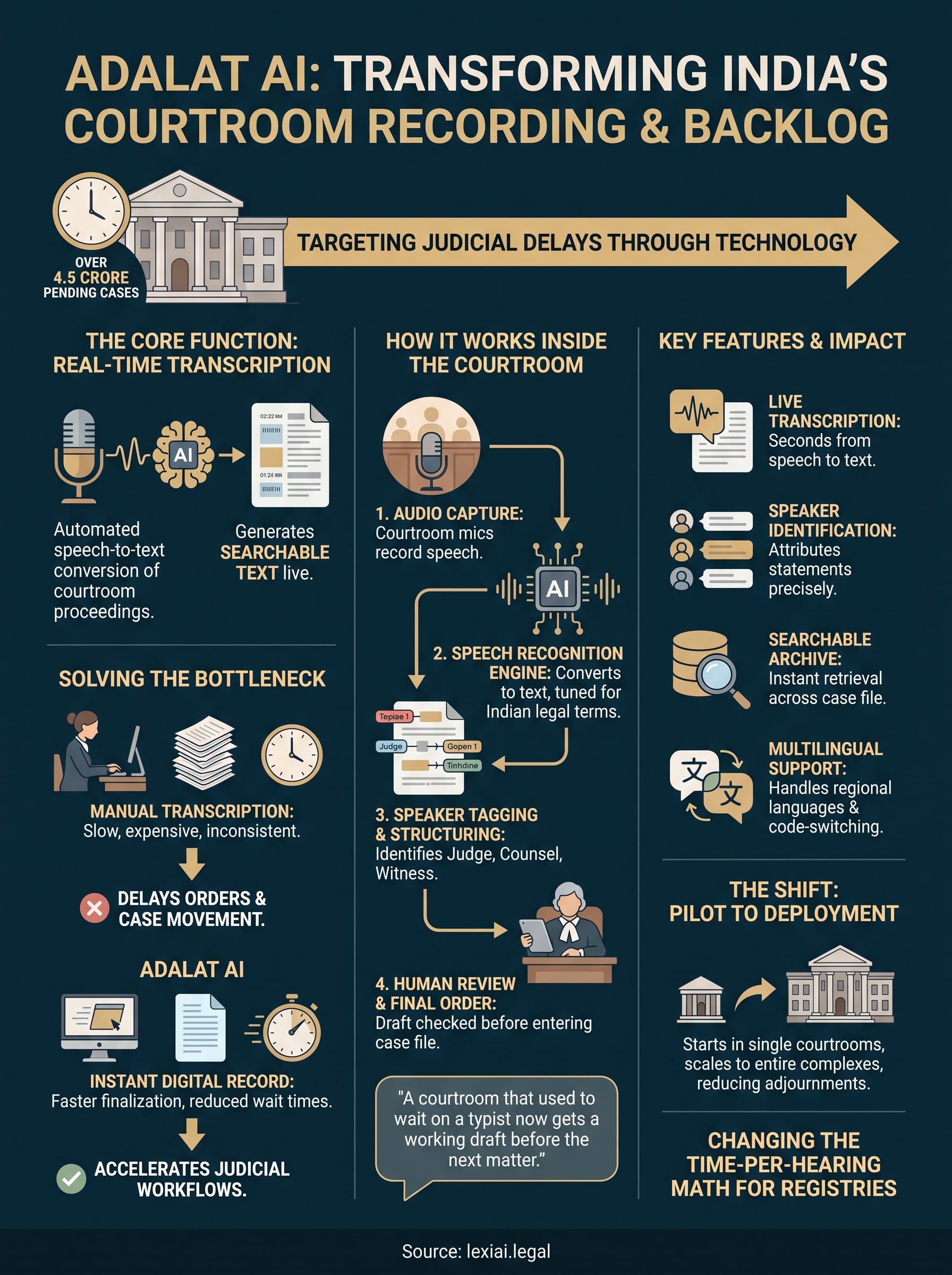
India's courts have accumulated more than 4.5 crore pending cases, according to figures published on the National Judicial Data Grid. Most of that backlog sits in district and subordinate courts, where a single overworked bench often hears thirty or forty matters in a day. Adalat AI targets one specific bottleneck in that chain: the time it takes to record what actually happens in the courtroom.
The transcription bottleneck
Stenographers and typists have long formed the backbone of court record-keeping in India, but manual transcription is slow, expensive to scale, and inconsistent across states. A judge dictating an order still waits on a human typist to keep pace, and that wait adds up across thousands of hearings every week. Adalat AI removes that dependency by generating a live transcript the moment testimony or argument is spoken, so the bench moves to the next matter instead of pausing for paperwork.
Every minute a court spends waiting on manual transcription is a minute it is not spending on the next case in a five-crore-case queue.
Why speed at the recording stage compounds
Delay at the recording stage does not stay contained to a single hearing. Slow transcription pushes back order uploads, which pushes back appeal timelines, which pushes back the next listing date. Because Adalat AI's automated transcription produces a record almost instantly, court staff can finalize orders the same day rather than waiting on a typed draft to be checked and corrected.
The scale problem needs a scale solution
Given the size of India's case backlog, incremental fixes rarely move the needle. Governments and High Courts have tried adding judges, fast-track benches, and evening courts, but staffing a stenographer pool that matches hearing volume across thousands of courtrooms is its own logistical challenge. Adalat AI's pitch is that software scales in a way that hiring cannot, which is why pilots have expanded from single courtrooms to entire court complexes.
How Adalat AI works inside the courtroom
Adalat AI runs on a network of courtroom microphones connected to a speech recognition engine trained specifically on Indian legal terminology, accents, and courtroom phrasing. Once a hearing begins, the system listens continuously and converts spoken testimony, arguments, and judicial dictation into text within seconds, rather than minutes or hours. Because the model is tuned for legal vocabulary, terms like "interlocutory application" or "suo motu" get transcribed correctly instead of garbled the way general-purpose dictation software often handles them.
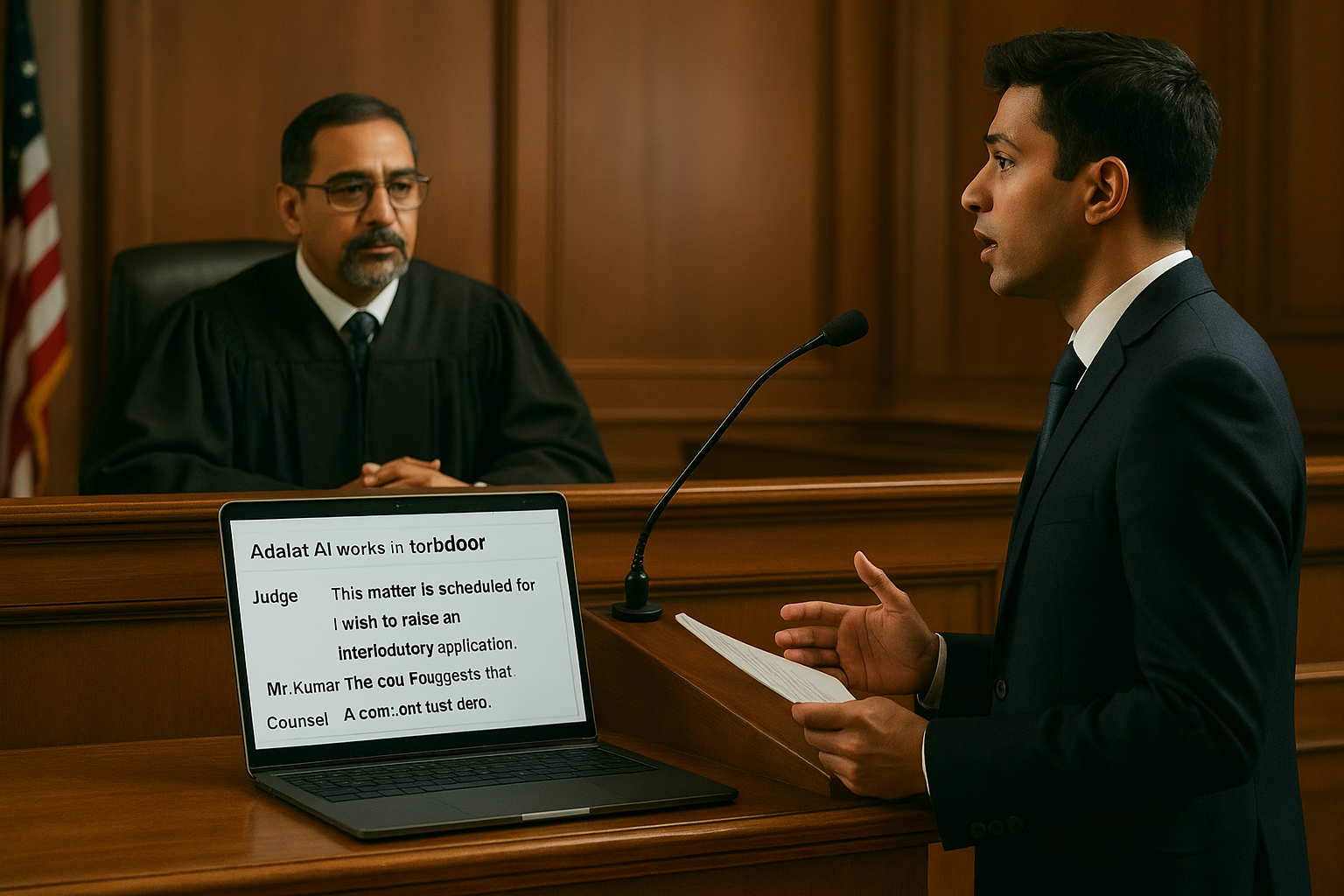
From spoken word to structured record
Behind that live transcript, the platform tags speakers, timestamps statements, and separates arguments from orders automatically. A typical hearing flows through these stages:
- Audio capture from courtroom microphones
- Real-time conversion into text via the transcription engine
- Speaker identification and timestamp tagging
- Structuring into a draft order or proceeding record
- Judge or clerk review before the record is finalized
A courtroom that used to wait on a typist now gets a working draft before the next matter is even called.
Human oversight stays in the loop
Nothing gets filed without a person checking it first. Judges and court staff still review the draft transcript, correct names or terms the system misreads, and approve the final version before it enters the case file. This keeps Adalat AI positioned as a support tool for the bench rather than a replacement for judicial judgment, which matters given how much weight a recorded order carries in appeal proceedings.
Key features that power the Adalat AI platform
Beyond live transcription, Adalat AI bundles several features that make the platform useful to court administrators, not just judges on the bench. The speaker identification system distinguishes between the judge, counsel for each side, and witnesses, which matters when a transcript later gets cited in an appeal and someone needs to know exactly who said what.
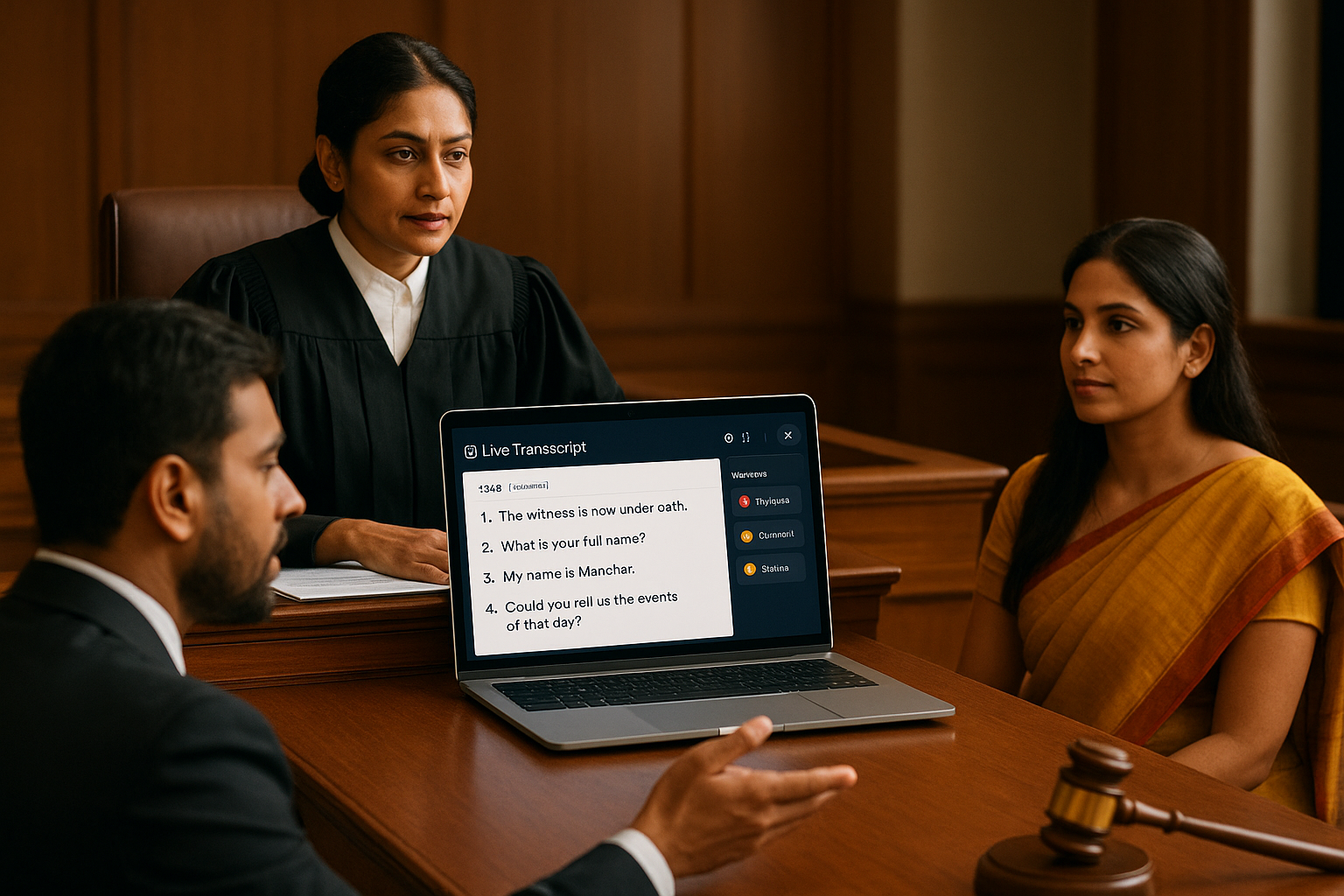
Search and retrieval across proceedings
Once a hearing is transcribed, the text becomes searchable, so a clerk can pull up every mention of a specific date, section, or witness name across a case file in seconds, much like checking case status by party name on eCourts. This turns what used to be a stack of handwritten notes into a structured record that a High Court registry can query directly.
Multilingual and dialect support
Indian courtrooms rarely run in a single language, and Adalat AI accounts for that with support for regional dialects and code-switching between English and Hindi or a state's official language mid-sentence. That flexibility matters more than it sounds, since a stenographer trained in one dialect often struggles with another.
A platform that cannot follow a judge switching between English and a regional language mid-order is not built for an Indian courtroom.
Integration with case management systems
The platform also connects with existing e-courts infrastructure, feeding structured transcripts and order drafts into case management dashboards for law practices that track hearing dates, pending orders, and case status. Below is a quick summary of the core feature set:
| Feature | What it does |
|---|---|
| Live transcription | Converts speech to text within seconds |
| Speaker tagging | Attributes statements to judge, counsel, witness |
| Searchable archive | Enables text search across hearings |
| Multilingual support | Handles regional languages and code-switching |
| E-courts integration | Feeds records into case management dashboards |
Where Adalat AI is deployed and what it has changed
Several district courts and a handful of High Courts across India have piloted Adalat AI, starting with subordinate courts in states that already had e-courts digitization underway. Reports from these pilots describe hearing rooms where a judge dictates an order and watches a draft appear on screen before counsel has even packed up their files. That shift from a multi-hour typing wait to a near-instant draft is the change courts notice first.
From pilot courtrooms to full complexes
Expansion has followed a familiar pattern: a single courtroom trial, then a rollout across an entire court complex once registrars see fewer adjournments tied to pending transcripts. Court administrators point to fewer instances of hearings running long simply because a stenographer could not keep pace with rapid-fire cross-examination. Some benches have reported clearing same-day orders that previously sat in a typing queue for a full day or more.
A court that can finalize an order the same afternoon it is dictated changes what "pending" means for everyone in that queue.
What the shift means for backlog numbers
No single tool erases a backlog measured in crores of cases, and Adalat AI does not claim otherwise. What has changed is the time-per-hearing math: fewer stalled orders, faster record availability for appeals, and less staff time lost to transcription errors that needed correction later. For registries drowning in paperwork, that recovered time adds up across thousands of daily hearings.
What this means for legal professionals
Adalat AI solves a courtroom problem: getting spoken proceedings into a reliable written record without stalling the bench. That is valuable, but it does not touch what happens before a hearing, the drafting, research, and case strategy that lawyers build in the weeks leading up to it. A faster transcript does not write your cross-examination notes or flag a weak clause in the contract underlying the dispute.
Understanding Adalat AI matters if you practice in courts adopting it, since your arguments now land in a searchable record almost instantly. But your own workload, from case preparation to research to drafting, still needs dedicated support, and there are AI tools that cut drafting and research hours for lawyers. That is where a platform built for lawyers rather than court registries fits in. If you want litigation prep, contract review, and legal research handled with the same speed courts now expect from their own records, see what the LeXi AI platform does for your practice across its LiTT, Desk, and Agent modules.