

Sale Deed Format: Sample and How to Draft One
A sale deed format follows a fixed structure under the Transfer of Property Act, 1882, and the Registration Act, 1908. It needs the names and addresses of buyer and seller, a full property description, sale consideration, payment details, possession clause, and indemnity clause, in that order. If any of these pieces are missing or vague, the sub registrar can object, or worse, the deed can be challenged later in court.
This article gives you a ready sample sale deed format along with a clause by clause breakdown, so you know exactly what each section must contain and why. You will see how recitals differ from operative clauses, where schedule of property fits in, and what language registrars in states like Maharashtra, Delhi, and Karnataka typically expect.
We also cover the practical drafting steps, from title verification to stamp duty calculation, that come before you finalize the deed for registration. If you draft sale deeds regularly, tools like LeXi Desk can speed up clause generation and flag risky indemnity language before you submit the document for registration.
Why the sale deed format matters in property transfers
Format is not a formality here, it decides whether your document holds up as valid evidence of ownership. Section 54 of the Transfer of Property Act, 1882 defines what a sale is, and the deed is the actual instrument that proves the transfer took place for consideration. Sub-registrars across states, whether in Pune, Delhi, or Bengaluru, check the sale deed structure against a checklist before accepting it for registration under Section 17 of the Registration Act, 1908. Skip a clause or leave the property schedule incomplete, and the registrar can return the document, costing you another round of drafting and another trip to the office.
Beyond registration, the format protects you in disputes years later. Courts read a sale deed the way it was written, line by line, so a missing possession clause or a vague boundary description can turn into an argument about what the parties actually agreed to.
A sale deed drafted outside the standard format is a dispute waiting for a trigger.
Getting the sale deed template right upfront avoids these problems:
- Prevents rejection at the sub-registrar's office
- Reduces the chance of a title dispute reaching civil court
- Makes the document bankable for home loans
- Speeds up due diligence for the next buyer
Buyers often discover format problems only when they try to resell the property or apply for a loan against it, and by then the original seller may be unreachable. That is exactly why lawyers verify the sale deed format before execution, not after, and why deviations from the standard structure almost always cost more time and money than getting it right the first time.
How to draft a sale deed using the standard format
Drafting starts before you open a word processor. Title verification through the sub-registrar's encumbrance certificate and a check of the last thirteen to thirty years of ownership records tells you whether the seller can actually transfer clear title. Skip this step, and no amount of correct formatting saves the deed from a later challenge.
What sequence should the drafting follow
Once title is clear, follow the standard sequence that most Indian sub-registrar offices expect:
- Draft the recitals, stating how the seller acquired the property
- Insert party details, buyer and seller names, ages, and addresses
- Add the property description and schedule with survey number and boundaries
- State the sale consideration and mode of payment
- Include possession, indemnity, and covenants clauses
- Calculate stamp duty based on the state's circle rate
Get the sequence wrong, and even accurate clauses read like a patchwork instead of one coherent deed.
Enterprises drafting deeds at volume often use a contract drafting tool like LeXi Desk to auto populate this sequence and flag missing clauses before the draft goes to the registrar, cutting the review cycle significantly.
Essential clauses in a sale deed format sample
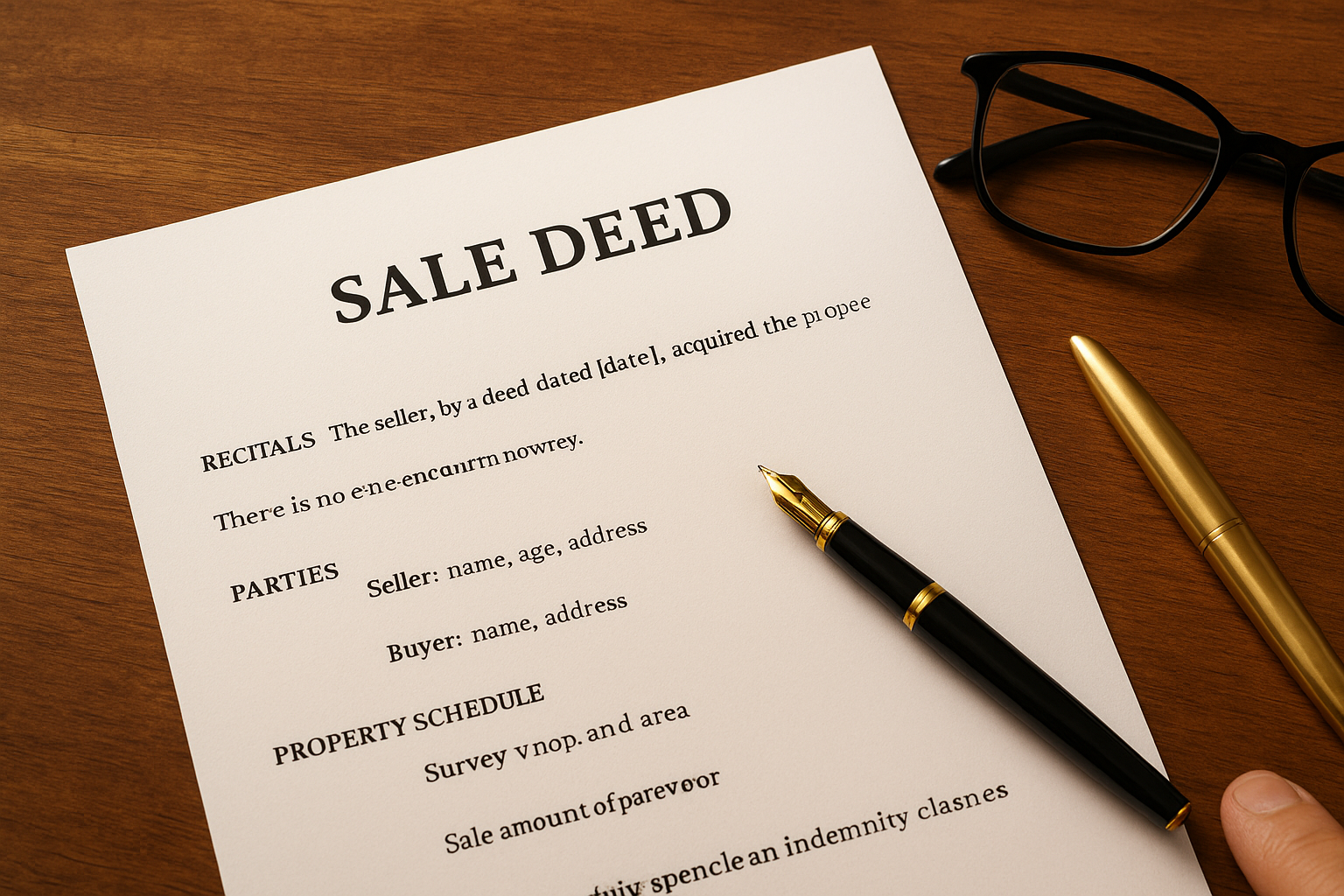
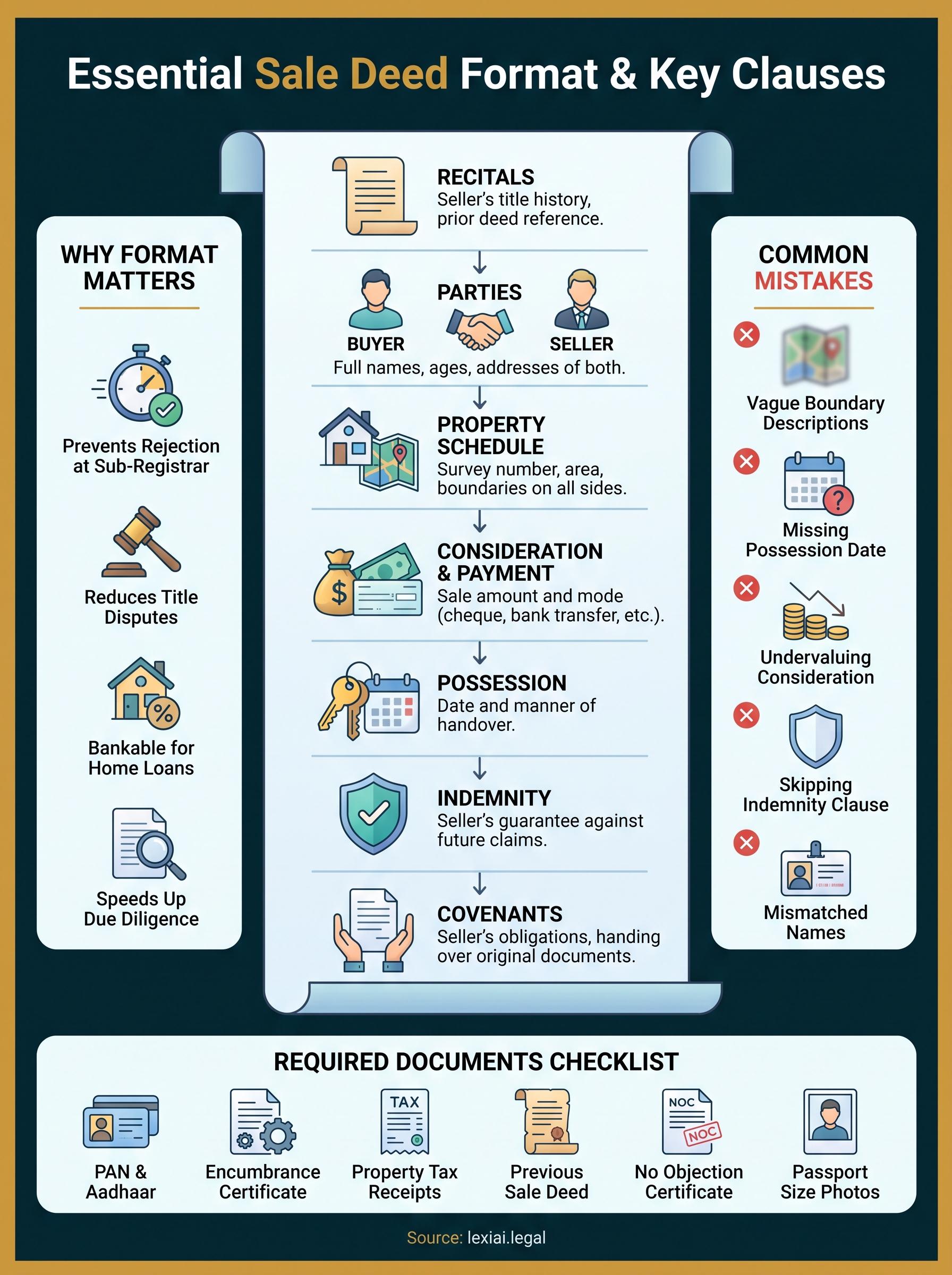
Every valid sale deed carries a fixed set of clauses, and skipping even one weakens the document's evidentiary value. Recitals open the deed, explaining how the seller got the property and confirming there is no encumbrance on it. Consideration and payment clauses follow, spelling out the exact sale amount and how it was paid, by cheque, demand draft, or bank transfer.
| Clause | What it must state |
|---|---|
| Recitals | Seller's title history, prior deed reference |
| Parties | Full names, ages, addresses of buyer and seller |
| Property schedule | Survey number, area, boundaries on all four sides |
| Consideration | Sale amount and payment mode |
| Possession | Date and manner of handover |
| Indemnity | Seller's guarantee against future claims |
| Covenants | Seller's obligations, such as handing over original documents |
Possession and indemnity clauses matter most in disputes, since they decide who bears the loss if a third party challenges the title later.
A sale deed without a clear indemnity clause leaves the buyer exposed the day a forgotten claim surfaces.
Schedule of property deserves special attention, since a mismatched survey number in this section has invalidated deeds even when every other clause was correct.
Documents required to execute and register a sale deed
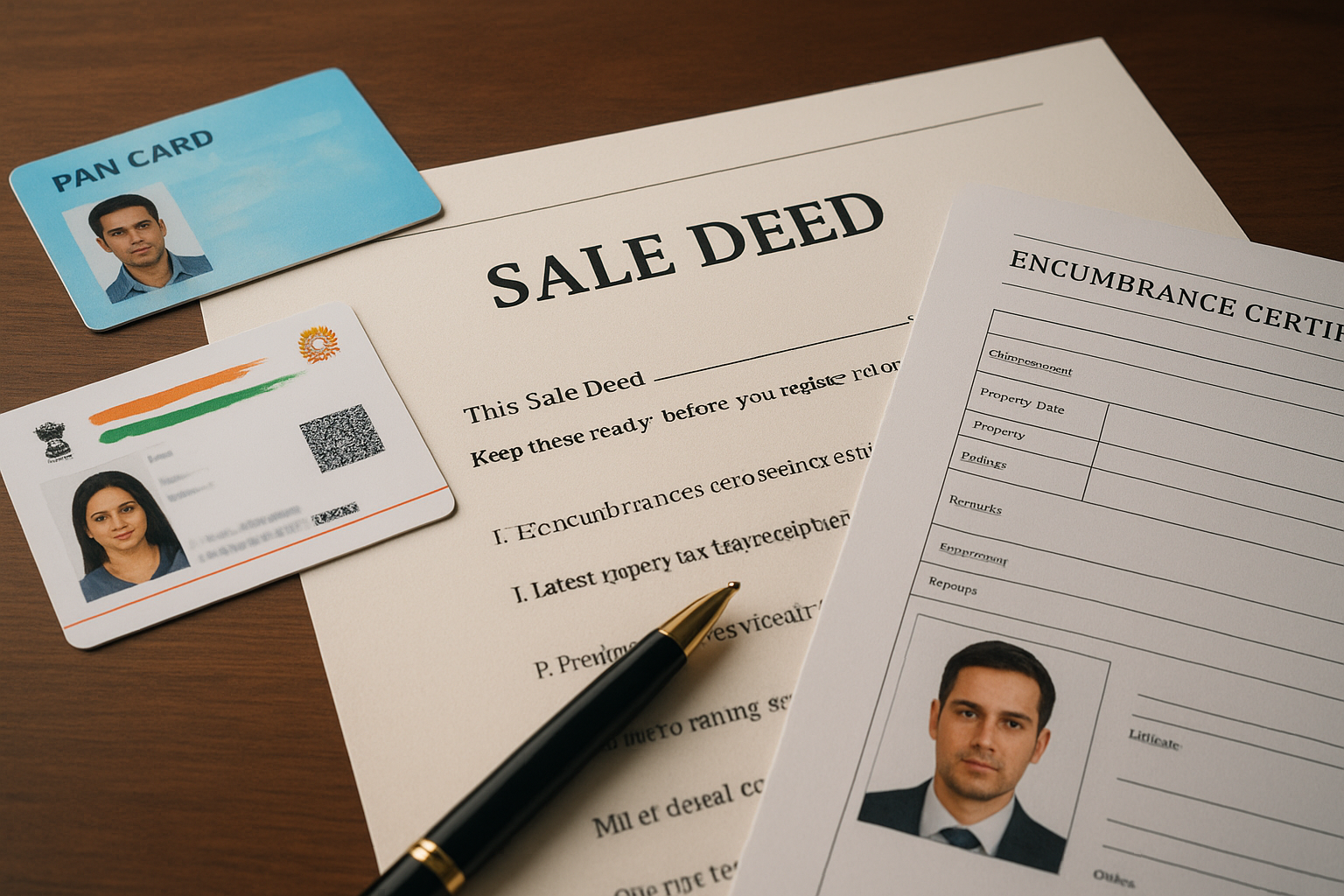
Paperwork determines whether your registration appointment goes smoothly or turns into a second trip to the sub-registrar's office. Every state insists on proof of identity, proof of the seller's title, and tax records before accepting a sale deed draft for registration. Missing even one document usually means the registrar asks you to reschedule, which delays possession and payment for both sides.
What paperwork do you need before the registration date
Keep these ready well before your slot:
- PAN cards and Aadhaar cards of buyer and seller
- Encumbrance certificate covering the last thirteen to thirty years
- Latest property tax receipts and khata or mutation extract
- Previous sale deed or title deed in the seller's name
- No objection certificate, if the property was under a housing society or mortgage
- Passport size photographs of both parties for the registrar's records
A missing encumbrance certificate has stalled more registrations than any drafting error.
Stamp duty payment proof and the executed sale deed sample itself, printed on the correct stamp paper value for your state, complete the file. Lawyers usually cross check this list against the property schedule before walking into the registrar's office, since a mismatch here forces the whole appointment to restart.
Common mistakes to avoid in a sale deed format
Lawyers see the same errors repeat across drafts, and most of them trace back to shortcuts taken during the first draft rather than deliberate omissions. Vague boundary descriptions, like writing "land bounded by neighboring plots" instead of citing exact survey numbers, top the list because registrars cannot verify the property against revenue records.
Which drafting errors cause the most rejections
- Copying an old sale deed sample without updating survey numbers or party details
- Leaving out the possession date, which later becomes a dispute over when liability shifted
- Undervaluing consideration to save stamp duty, which invites penalty under state stamp acts
- Skipping the indemnity clause entirely, assuming the sale itself implies protection
- Mismatching names across the deed, PAN card, and encumbrance certificate
Undervaluing the sale consideration to save on stamp duty is the single costliest shortcut in a sale deed.
Stamp duty shortcuts feel tempting at execution time, but the penalty and interest charged later almost always exceed what the seller saved. Registrars in most states now cross-check declared value against the circle rate automatically, so the gap gets flagged before the deed even reaches the registration counter.
Getting your sale deed right
A sale deed stands or falls on its structure. Get the recitals, property schedule, consideration, possession, and indemnity clauses right, and the document survives registration scrutiny and any dispute that comes years later. Skip a step, and you are looking at a rejected registration at best, or a contested title at worst.
None of this replaces careful drafting and title verification, but the right tools make the process faster and catch errors before they reach the sub-registrar. Consistent formatting paired with a thorough documents checklist is what separates a deed that gets registered in one visit from one that bounces back twice.
If you draft sale deeds often, whether as an independent lawyer or as part of a firm handling property transactions at volume, it is worth seeing how AI-assisted drafting handles clause generation and risk flagging in practice. Explore LeXi AI's platform and see how LeXi Desk fits into your existing drafting workflow.